Resonant Ecologies
Ecoacoustics and Movement to Compose Biomes
Resonant Ecologies is a project of EchoLab and NOIRFLUX. The project is supported by a SoundSpace Research Initiation Award from the SoundSpace Transdisciplinary Institute at the University of Rochester.
Research question/artist statement
Resonant Ecologies is an interdisciplinary installation where movement, sound and ecological thinking converge. The body becomes the instrument that drives the piece, transforming the viewer from passive observer to the mechanism though which the work happens. Motion sensors track participants' gestures, pace, and proximity, translating movement into layered soundscapes from field recordings and shifting projected imagery drawn from the natural world. Rooted in somatic practice and eco-centric philosophy, the piece treats presence itself as a compositional act: sustained attention and embodied care allow rich, complex environments to emerge, while carelessness or absence causes them to fade. Blurring the line between performer and audience, dance and installation, art and ecological instrument, Resonant Ecologies asks participants to witness and choreograph an ecosystem, moving toward a different relationship between body and environment.
Process/iteration/how
ECOACOUSTICS
Two column text section with a leading drop-cap. This is an easy way to add a little old-fashioned style to the start of a story or the start of a new major story section.
Aquila alta in caelo volabat, oculos ad astra fixos habens. Subito, aliquid novum aspectu eius occurrit, terra ignota quae ante eam in mundo non erat visa. Aliis avibus similes, aquila quamvis fortem et regalem, timor cepit, sed curiositas tamen eam animo movit. Descendere coepit, donec ad terram incolumis appulit.
Sed terra non erat quae aquila exspectaverat. Praeterea solitudinem vidit, et nullum viventium creaturarum vestigium, nec humanae nec aliae. Curiosus, aquila explorare coepit.
Intravit in silvam densam, ubi arbores altissimae creverunt. In hortis florum volitavit, ubi insecta variis coloribus exultabant. Trans fluvium aquilae cursum dirigebat, ubi piscis pulcherrimi natabant. Tandem in campum vastum appulit, ubi nemora et planitie ex aequo se extendebant. Aquila tunc sentit gaudium maxime, nam haec terra ei totam spem et sapientiam monstravit.
Often, landscapes change acoustically before they appear visually different. Bioacoustics bridge a key gap, acting as an early signifier of ecosystem change.
Created with input from ChatGPT////SOURCE???
Created with input from ChatGPT////SOURCE???
Biomes
Why these were chosen...why the animals were chosen...specific things about soundscapes and the use of ecoacoustics
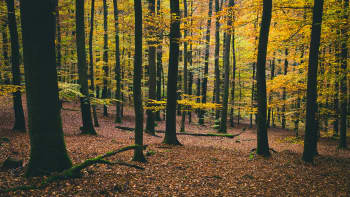
Temperate Deciduous Forest
The temperate deciduous forest is a biome shaped by seasonal change, broadleaf trees, and the continual recycling of nutrients. Located primarily in eastern North America, Europe, and eastern Asia, they experience four distinct seasons, with an annual precipitation of typically about 30–59 inches (750–1,500 millimeters), distributed throughout the year. Oaks, maples, beeches, and hickories are characteristic trees, although evergreen species may also be found in this biome.
Birds, amphibians, mammals, invertebrates, and fungi contribute to forest life. Animals and fungi help maintain forests through seed dispersal, soil turnover, and nutrient cycling. Fallen leaves form a protective layer that insulates the ground, reduces erosion, and provides habitat for small organisms. As this material decomposes, nutrients return to the soil and support new growth. The forest floor is an essential part of the ecosystem. These forests provide wildlife habitat, store carbon, and support clean air and water. Healthy forest soils help filter water and limit erosion.
Temperate Deciduous Forest Biome Map/Source: NASA
Temperate Deciduous Forest Biome Map/Source: NASA
Sources: NASA, National Park Service, OpenStax, USDA Forest Service
Temperate Deciduous Forest
Forest Floor
The soundscape of a deciduous forest floor is defined by a mix of biological sounds (biophony), natural abiotic sounds (geophony), and unique acoustic absorption properties created by the ground and its layers.
The Litter Layer (The "Basement"): Composed of decomposing leaves, twigs, woody debris, and rich organic soil that act as a porous, soft blanket. This layer dampens sound waves and heavily absorbs low-frequency noise.
The Forest Floor Effect: The interaction between sound waves and the porous, hard or leaf-covered ground creates a physical phenomenon that significantly reduces noise propagation (such as distant traffic or wind) compared to open terrain.
Biophony at the Ground Level: Home to small organisms like insects, earthworms, beetles, and ground-foraging birds. Insect chirps, scratching in the leaf litter, and low-level rustlings dominate this micro-zone.
Acoustic Diversity in the Trees
The biodiversity and health of the forest can be tracked through ecoacoustics. The abundance and diversity of species in a temperate deciduous forest is in large part due to the habitat provided by its trees. Sounds of birds, insects, mammals, invertebrates, plants, and weather combine to create a soundscape that that serves as an ecological indicator of health both above and below ground.
Forest soundscapes have also been scientifically proven to improve human health and well-being. Birdsong, wind through forest leaves, and water traveling through the forest all help to compose a sonic picture of health which humans recognize as such through the nervous system.
Absorbing noise
A unique acoustic feature of the temperate deciduous forest is the sound that the biome absorbs. Noise pollution from cars and industry is absorbed by bark and the forest floor, creating healthier environments for everything living in and near the forests.
Temperate Deciduous Forest
Arctic Tundra
The Arctic tundra is a largely treeless biome shaped by extreme cold, a short growing season, and frozen ground. Arctic tundra stretches across northern Alaska, Canada, Greenland’s ice-free margins, Scandinavia, and Siberia, generally north of the boreal forest. Long, cold winters give way to brief, cool summers. Precipitation is low—often about 6–10 inches (150–250 millimeters) annually, including snow—although conditions vary by region.
Under much of artic tundra is permafrost: ground that remains frozen year-round. In summer, a surface layer called the active layer thaws, allowing plants to grow. Frozen ground beneath it can restrict drainage, creating ponds, wetlands, and waterlogged soils despite the low precipitation. Animals associated with tundra landscapes exhibit adaptations including insulating coats, camouflage, seasonal migration, and hibernation. Many birds travel great distances to breed and feed in the Arctic during summer.
Arctic Tundra Biome Map/Source: NASA
Arctic Tundra Biome Map/Source: NASA
Sources: NASA, National Park Service, NOAA

Arctic Tundra
The soundscape of the Arctic tundra is a layered blend of geological forces, wildlife vocalizations, and a growing presence of human activity.
Geophony
Ranging from the low, hollow hum of gale: Ranging from the low, hollow hum of gales whipping across flat, treeless terrain to sudden blizzards, ice pellets, and millions of resonant glacial meltwater drips during the brief summer thaw. Shifting, cracking, groaning, and whining sea ice and glaciers dominate both the land and underwater acoustic environments, especially during winter and spring transitions.
Biophony
Absorbing noise
A unique acoustic feature of the temperate deciduous forest is the sound that the biome absorbs. Noise pollution from cars and industry is absorbed by bark and the forest floor, creating healthier environments for everything living in and near the forests.
Arctic Tundra
Arctic Fox
Vulpes lagopus
Main threats: scarcity of prey, climate change, hunting
Active year-round, some migrate
Savanna Grassland
While the concept of introducing beneficial bacteria into the gut through probiotics is not new, recent studies are shifting the focus from general probiotic supplements to a more nuanced understanding of specific microbial strains. Scientists are discovering that not all bacteria are created equal, and certain strains play crucial roles in maintaining gut homeostasis.
In this quest for precision, researchers are exploring the potential therapeutic applications of targeted microbial interventions. From warding off pathogenic invaders to promoting the growth of beneficial species, the microbiome is emerging as a frontier for novel therapeutic strategies. The concept of fecal microbiota transplantation, once a niche approach, is gaining recognition for its potential in restoring microbial balance in conditions such as Clostridium difficile infection.
Grasslands Biome Map/Source: NASA
Grasslands Biome Map/Source: NASA
Savanna Grassland
Forest Floor
The soundscape of a deciduous forest floor is defined by a mix of biological sounds (biophony), natural abiotic sounds (geophony), and unique acoustic absorption properties created by the ground and its layers.
Acoustic Diversity in the Trees
The biodiversity and health of the forest can be tracked through ecoacoustics. The abundance and diversity of species in a temperate deciduous forest is in large part due to the habitat provided by its trees. Sounds of birds, insects, mammals, invertebrates, plants, and weather combine to create a soundscape that that serves as an ecological indicator of health both above and below ground.
Absorbing noise
A unique acoustic feature of the temperate deciduous forest is the sound that the biome absorbs. Noise pollution from cars and industry is absorbed by bark and the forest floor, creating healthier environments for everything living in and near the forests.
Savanna/Grassland
Tropical Rainforest
While the concept of introducing beneficial bacteria into the gut through probiotics is not new, recent studies are shifting the focus from general probiotic supplements to a more nuanced understanding of specific microbial strains. Scientists are discovering that not all bacteria are created equal, and certain strains play crucial roles in maintaining gut homeostasis.
In this quest for precision, researchers are exploring the potential therapeutic applications of targeted microbial interventions. From warding off pathogenic invaders to promoting the growth of beneficial species, the microbiome is emerging as a frontier for novel therapeutic strategies. The concept of fecal microbiota transplantation, once a niche approach, is gaining recognition for its potential in restoring microbial balance in conditions such as Clostridium difficile infection.
The dynamic interplay between the microbiome and our immune system is also a focal point of exploration. Researchers are uncovering how specific microbial species influence immune responses, shedding light on the intricate crosstalk between these two vital components of our biological defense mechanisms. The implications extend beyond gastrointestinal health, reaching into the realms of autoimmune diseases and allergies, where the microbiome may play an unexpected role in shaping our immune tolerance.
Tropical Rainforest
Forest Floor
The soundscape of a deciduous forest floor is defined by a mix of biological sounds (biophony), natural abiotic sounds (geophony), and unique acoustic absorption properties created by the ground and its layers.
Acoustic Diversity in the Trees
The biodiversity and health of the forest can be tracked through ecoacoustics. The abundance and diversity of species in a temperate deciduous forest is in large part due to the habitat provided by its trees. Sounds of birds, insects, mammals, invertebrates, plants, and weather combine to create a soundscape that that serves as an ecological indicator of health both above and below ground.
Absorbing noise
A unique acoustic feature of the temperate deciduous forest is the sound that the biome absorbs. Noise pollution from cars and industry is absorbed by bark and the forest floor, creating healthier environments for everything living in and near the forests.
Tropical Rainforest
“Just by listening to the landscape, we can learn all sorts of things that we might not otherwise be aware of.”
Bernie Krause, Soundscape Ecologist


METAPHORICAL MEANING OF THE PROJECT
MOVEMENT/AGENCY/DISTURBANCE as affecting
ADD SOMATIC PIECE HERE
MORE EXAMPlES OF MOVEMENT
Rose's thoughts
As we explore the intricate connection between the Mediterranean diet and gut health, patterns begin to emerge. Research suggests that the microbiome of individuals adhering to this dietary pattern is characterized by greater diversity and a prevalence of beneficial bacteria. The implications extend beyond the gut, with potential links to reduced inflammation, improved metabolic health, and even a lower risk of chronic diseases such as cardiovascular disorders.
SOMATICS
Project Team Members: Stephanie Ashenfelder, Rose Pasquarello Beauchamp, Lorne Covington, Andrea Gluckman
Illustrations: Blake Lavia (and Tzintzun?) Talking Rivers
Sound Library Sources?
Digital Exhibition created by Andrea Gluckman
 Built with Shorthand